




Every home relies on a safe and reliable electrical system, and at the centre of that system is the consumer unit. Often referred to as the fuse box, a consumer unit distributes electricity throughout your property while providing vital protection against electrical faults.
Whether you're renovating your home, replacing an outdated fuse box or simply want to understand how your electrical system works, knowing the purpose of a consumer unit can help you make informed decisions.
Here's everything you need to know.
What Is a Consumer Unit?
A consumer unit is the main electrical distribution board within a property.
It receives electricity from your supplier's meter and distributes it safely to the various electrical circuits around your home.
Each circuit supplies power to a specific area or purpose, such as:
-
Lighting
-
Socket outlets
-
Kitchen appliances
-
Electric showers
-
Cookers
-
Outdoor power
-
Garage circuits
The consumer unit also contains protective devices that automatically disconnect the electricity if a fault is detected, helping reduce the risk of electric shock, overheating and fire.
Why Is It Called a Consumer Unit?
The term "consumer unit" is the official name used within the UK electrical industry.
Many homeowners still refer to it as a fuse box because older installations contained traditional wire fuses. However, modern consumer units use circuit breakers and other protective devices instead of replaceable fuses.
Although the technology has changed significantly, the purpose remains the same: safely distributing electricity throughout the property.
How Does a Consumer Unit Work?
Electricity enters the property through the electricity meter before reaching the consumer unit.
From there, the incoming supply is divided into individual circuits, each protected by its own safety device.
If an electrical fault occurs, the affected circuit can be disconnected without shutting off power to the entire house.
This allows problems to be isolated quickly while keeping unaffected circuits operational.
What's Inside a Consumer Unit?
Modern consumer units contain several important components that work together to protect your electrical installation.
Main Switch
The main switch allows you to isolate the entire electrical supply to your property when maintenance or emergency work is required.
Circuit Breakers (MCBs)
Miniature Circuit Breakers (MCBs) protect individual circuits from overloads and short circuits.
If too much current flows through a circuit, the breaker automatically trips to prevent damage to wiring and connected equipment.
Unlike older fuses, MCBs can usually be reset once the fault has been resolved.
RCD Protection
Residual Current Devices (RCDs) monitor the flow of electricity through a circuit.
If they detect electricity leaking to earth—which could indicate damaged wiring or someone receiving an electric shock—they disconnect the supply within milliseconds.
RCDs provide an additional layer of protection that significantly improves electrical safety.
RCBOs
Many newer consumer units use RCBOs (Residual Current Breaker with Overcurrent protection).
These devices combine the functions of an MCB and an RCD into a single unit, providing individual protection for each circuit.
This means that if one circuit develops a fault, it can trip independently without affecting other parts of the property.
Types of Consumer Units
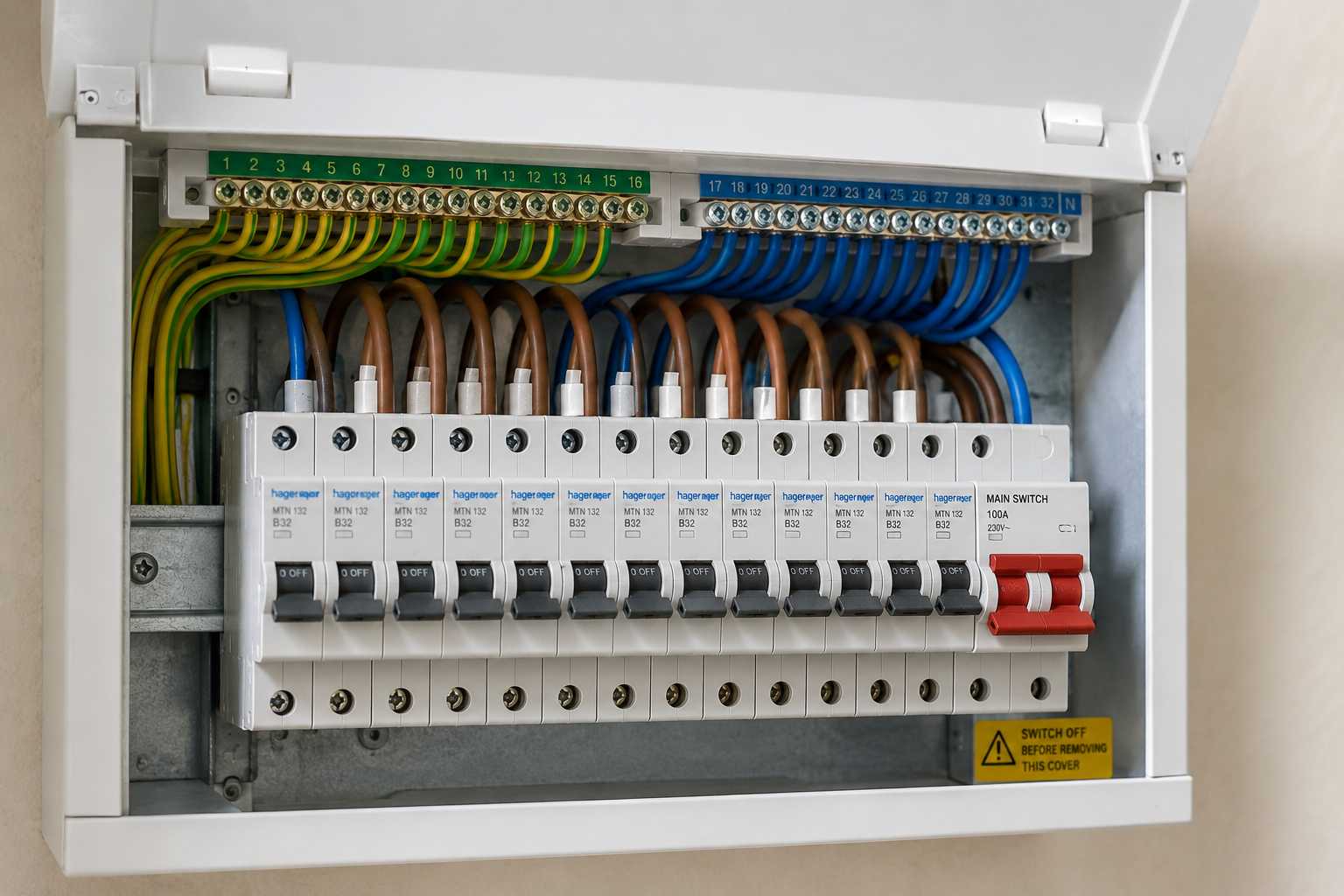
There are several types of consumer units available depending on the size and requirements of the installation.
Dual RCD Consumer Units
These divide circuits between two RCDs, helping balance electrical loads while providing fault protection.
They remain a popular option for many domestic properties.
High Integrity Consumer Units
These units allow certain important circuits to have dedicated protection, reducing disruption if another circuit develops a fault.
RCBO Consumer Units
Increasingly common in modern homes, RCBO consumer units offer individual protection for every circuit, making fault finding easier and minimising inconvenience.
Surge Protection Devices (SPDs)
Many modern consumer units include a Surge Protection Device (SPD) to help protect your home's electrical system from sudden voltage spikes.
These surges can be caused by events such as lightning strikes or fluctuations in the electricity network and have the potential to damage sensitive electronics and appliances.
As surge protection is now recommended in many domestic installations under current UK wiring regulations, consumer units with built-in SPDs have become one of the most popular choices for new installations and upgrades.
When Should a Consumer Unit Be Replaced?
Consumer units are designed to last for many years, but there are situations where replacement may be recommended.
Common reasons include:
-
An older fuse box with rewireable fuses
-
Lack of RCD protection
-
Damage or signs of overheating
-
Home renovations or extensions
-
Additional electrical circuits being installed
-
Recommendations following an Electrical Installation Condition Report (EICR)
Replacing an outdated consumer unit can improve both safety and compliance with current electrical standards.
Can You Replace a Consumer Unit Yourself?
Replacing a consumer unit is not considered a DIY job.
Because it involves working on the property's main electrical supply, installation should only be carried out by a qualified electrician.
The work must comply with current UK electrical regulations and will require inspection, testing and certification before being put into service.
Attempting to replace a consumer unit without the necessary knowledge and qualifications can be extremely dangerous.
Choosing the Right Consumer Unit
When selecting a consumer unit, consider factors such as:
-
Number of electrical circuits
-
Type of protection required
-
Future expansion
-
Compatibility with your installation
-
Build quality
-
Compliance with current UK standards
It's often worth choosing a slightly larger unit than you currently need, particularly if you're planning future additions such as electric vehicle chargers, garden buildings or solar panels.
If you're looking for consumer units for home electrical systems, selecting a modern unit with appropriate circuit protection can help ensure your home's electrical installation remains safe, reliable and ready for future upgrades.
Final Thoughts
A consumer unit is one of the most important safety components in any home's electrical system. By distributing electricity to individual circuits and protecting against overloads, short circuits and earth faults, it plays a vital role in keeping your property and its occupants safe.
Whether you're upgrading an ageing fuse box or planning a new installation, choosing a modern consumer unit with the right level of protection is a worthwhile investment. Combined with professional installation and regular electrical inspections, it will help keep your home's electrical system operating safely for years to come.